Chronic sinus congestion is one of those problems people learn to just live with. You try a decongestant, a saline rinse, maybe a course of antibiotics if it tips into a full sinus infection — and it helps for a while, then comes back. If that cycle sounds familiar, it’s worth looking at what’s actually happening in your sinuses, and whether mold exposure is playing a role.
How mold actually affects your sinuses
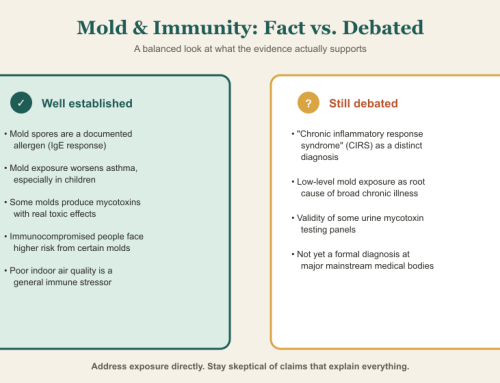
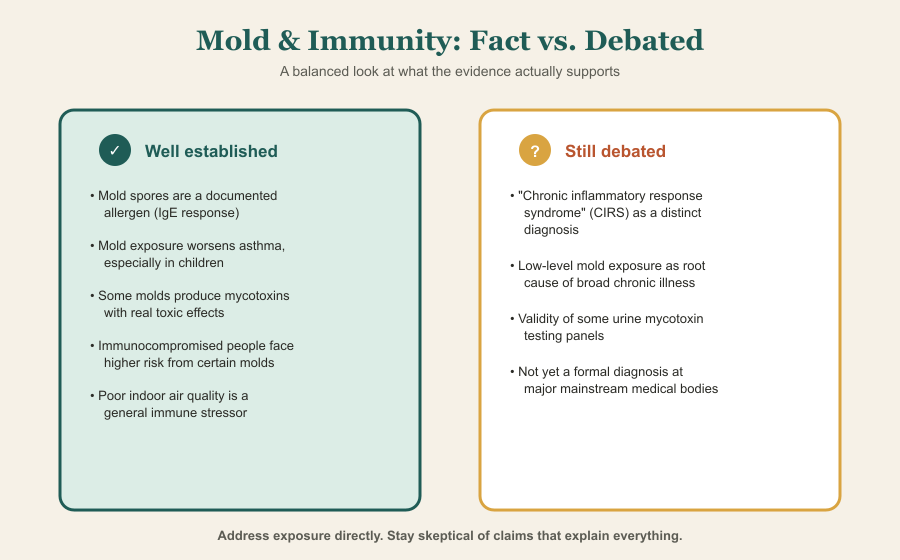
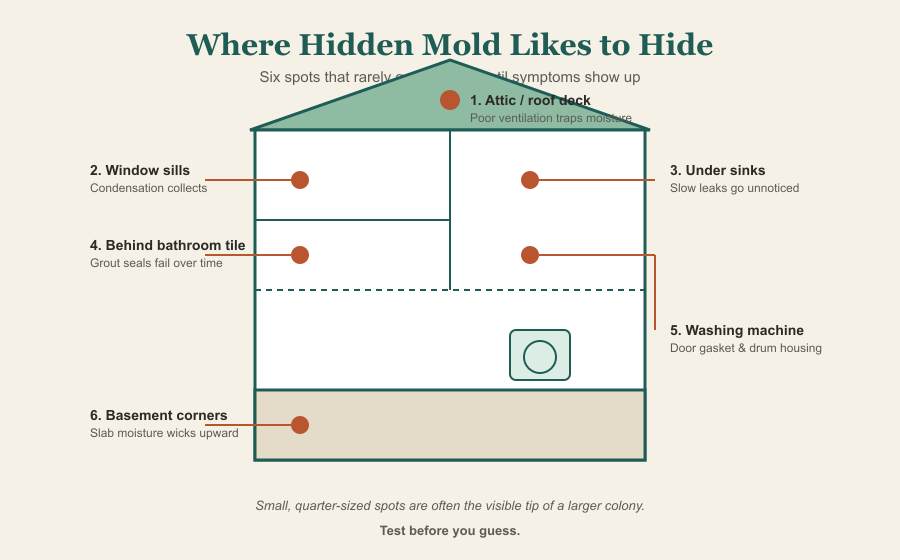
Your sinuses are lined with mucous membranes that are constantly filtering the air you breathe. When you inhale mold spores regularly — from a damp bathroom, a musty basement, or a water-damaged wall — your immune system treats them as an irritant and mounts an inflammatory response. In people who are sensitive to mold, or exposed to it repeatedly over time, that inflammation can become chronic rather than resolving on its own.
The research on chronic rhinosinusitis has increasingly pointed toward a fungal and biofilm component in a meaningful subset of cases — not necessarily a full-blown infection, but ongoing irritation and immune reactivity to fungal elements sitting in the sinus cavity. This is different from, and can coexist with, straightforward bacterial sinus infections, which is part of why antibiotics alone sometimes don’t fully resolve the problem.
Signs your sinus issues might have a mold component
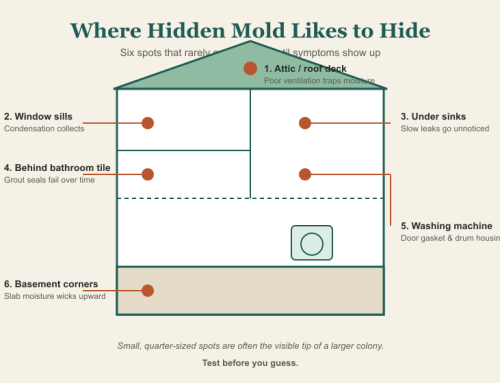
- Congestion that’s worse at home than elsewhere
- Sinus symptoms that started or worsened after a known water leak or a move
- Frequent “sinus infections” that a course of antibiotics never quite fully clears
- Post-nasal drip alongside a general sense of brain fog or fatigue
- Symptoms that improve on vacation and return within a day or two of coming home
What actually helps
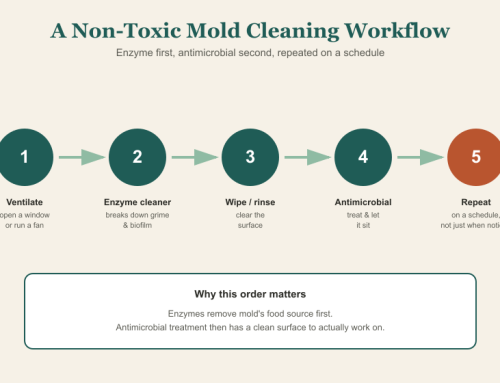
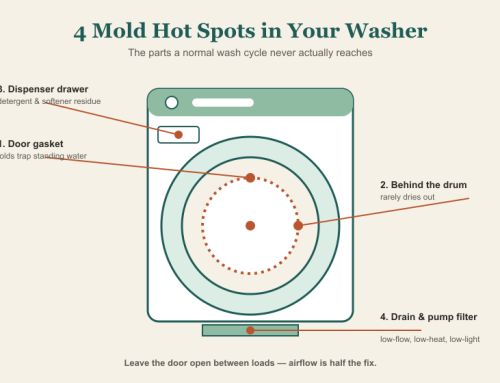
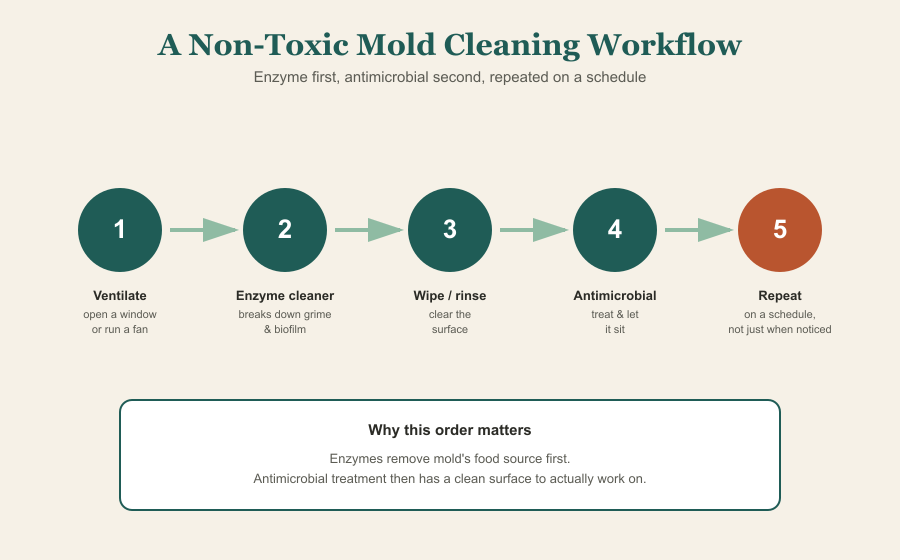
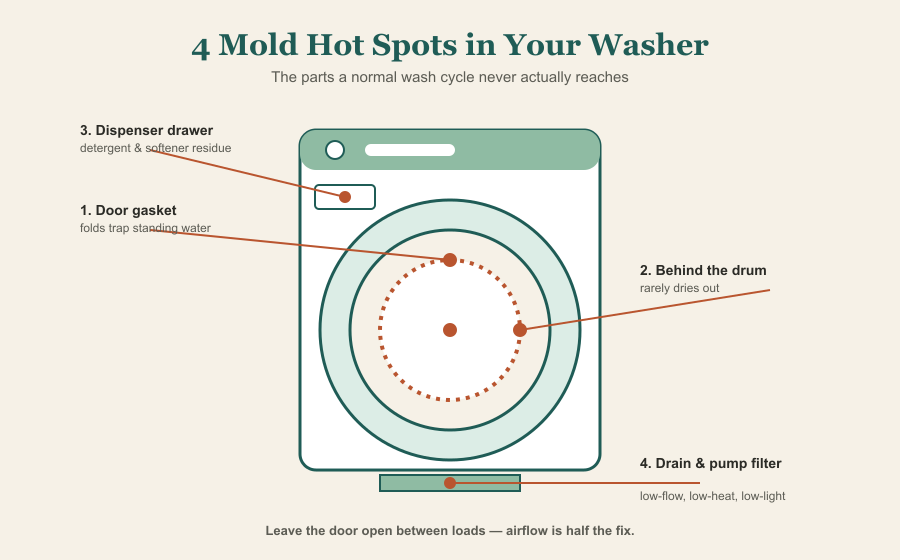
The first, non-negotiable step is reducing your exposure — if there’s an active mold source in your home, no nasal product fully compensates for continuing to breathe it in daily. That’s the home-side work we’ve covered elsewhere on this site.
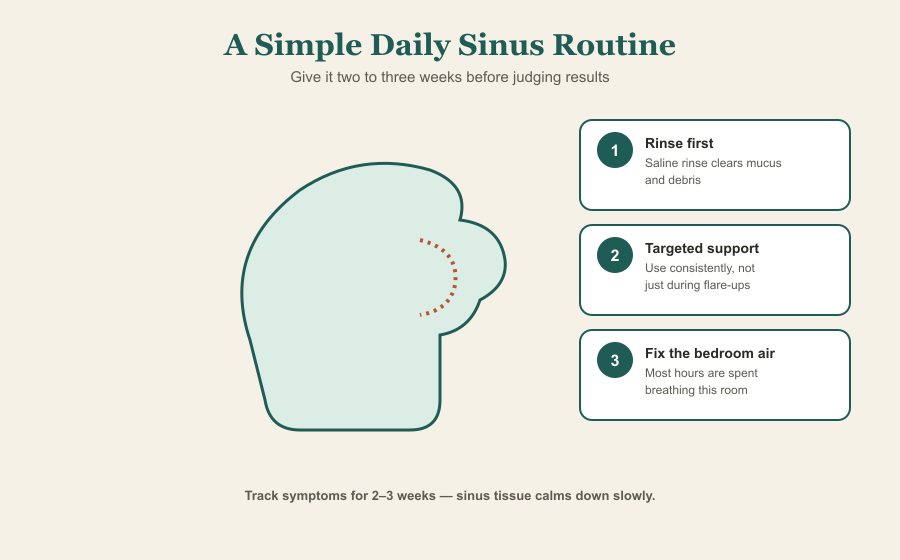
On the body side, a lot of people find that a dedicated nasal care routine makes a real difference in day-to-day symptoms, separate from home remediation. CitriDrops Dietary Supplement is a grapefruit-seed-extract-based formula that some practitioners recommend as part of a broader mold-sensitivity routine, taken as drops. For more targeted sinus support, Sinus Defense 2.0 is formulated specifically for nasal and sinus use rather than general supplementation, and is one of the more frequently recommended products in this category. You can see the rest of the nose and sinus product line here if you want to compare a few options against your specific symptoms.
Set realistic expectations
It’s worth being upfront: sinus issues are genuinely multi-causal. Structural issues (like a deviated septum), allergies to things other than mold (pollen, dust mites, pet dander), and chronic bacterial infection can all produce similar symptoms, and can coexist with a mold component. A nasal care routine is a reasonable, low-risk thing to try, but if symptoms are severe, persistent, or accompanied by facial pain, fever, or vision changes, see an ENT rather than trying to self-manage indefinitely.
Frequently Asked Questions
Can mold exposure directly cause a sinus infection? Mold exposure is more accurately understood as an irritant and inflammatory trigger than a direct infectious cause in most cases. That inflammation, though, can create conditions — swelling, trapped mucus, disrupted normal sinus drainage — that make an actual bacterial or fungal infection more likely to take hold. The relationship is more “sets the stage for” than “directly causes” for most people.
How long before I should expect to notice improvement from a sinus care routine? Sinus tissue is slow to calm down compared to, say, skin. Most people evaluating a new routine should give it a genuine two to three weeks of consistent use before judging whether it’s working, rather than stopping after a few days.
Is it safe to use nasal care products long-term? This depends heavily on the specific product — some nasal treatments (like certain decongestant sprays) can cause rebound congestion with prolonged use, while saline rinses and many plant-based formulations are generally considered safe for regular, ongoing use. Always check the specific product’s label and, if you’re planning on long-term daily use, it’s worth a quick conversation with your doctor or pharmacist.
Should I see an ENT or an allergist for chronic sinus symptoms? An allergist is a good starting point if you suspect a classic allergic trigger (mold, pollen, dust, pet dander) and want to identify exactly what you’re reacting to. An ENT (ear, nose, and throat specialist) is generally the better choice if you’re dealing with structural issues, recurring infections, or symptoms that haven’t responded to allergy-focused treatment. Many people end up seeing both over time.
Can kids use the same approach for sinus issues related to mold? Children can be more sensitive to both mold exposure and to certain nasal products, so pediatric dosing and product suitability shouldn’t be assumed to match adult guidance. Check product labels for age recommendations and involve your pediatrician, especially for a child with recurring or severe symptoms.