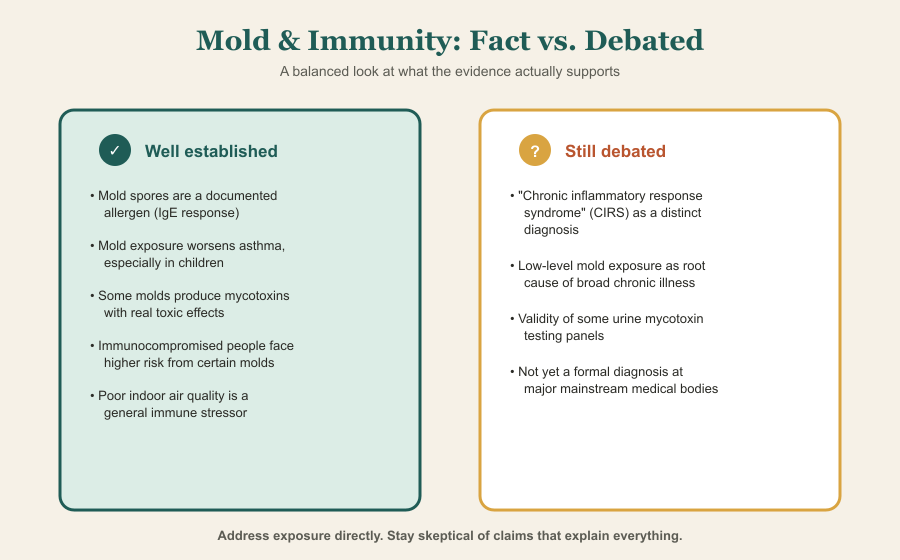
Mold and the immune system is a topic that attracts a lot of strong claims in both directions — some corners of the internet treat mold exposure as the root cause of nearly every chronic illness, while some mainstream sources downplay it as a minor allergy issue at most. The honest picture is more specific than either extreme, so it’s worth laying out what’s actually well established versus what’s still being debated.
What’s well established
There’s solid, broad scientific consensus on a few points:
- Mold spores are a documented allergen. For people with mold allergies, exposure triggers a standard IgE-mediated immune response — sneezing, congestion, itchy eyes, skin irritation — the same basic mechanism as pollen or pet dander allergies.
- Mold exposure worsens asthma. This is one of the better-studied areas: damp, moldy indoor environments are consistently associated with more frequent and more severe asthma symptoms, particularly in children.
- Some molds produce mycotoxins, chemical compounds that can have toxic effects at sufficient exposure levels, and immunocompromised individuals are at meaningfully higher risk from certain mold species, including invasive fungal infection in severe cases.
- Poor indoor air quality generally stresses the immune system, in the same broad sense that any chronic irritant exposure does.
What’s more debated
Where things get less settled is the idea of “chronic inflammatory response syndrome” (CIRS) or broad “mold illness” as a distinct, chronic, systemic condition caused by ongoing low-level mold and mycotoxin exposure in genetically susceptible people — fatigue, brain fog, joint pain, and a long list of other symptoms attributed to biotoxin exposure. This framework has real advocates among a subset of environmental medicine practitioners and real patients who report meaningful improvement using mold-focused protocols. It has not been adopted as a formal diagnosis by major mainstream medical bodies, and researchers who are skeptical point to a lack of large, well-controlled studies and concerns about testing methods (like some urine mycotoxin panels) that haven’t been fully validated.
The honest, useful takeaway: if you’re dealing with vague, chronic, hard-to-pin-down symptoms, mold exposure is a reasonable thing to investigate and address, especially if you have a documented source of exposure — but it’s worth doing alongside your regular medical care rather than as a replacement for it, and it’s worth staying skeptical of any single explanation that claims to account for every symptom you have.
Practical, low-risk ways to support your immune system if you’ve had mold exposure
Regardless of where you land on the more contested claims, a few things are broadly reasonable and low-risk:
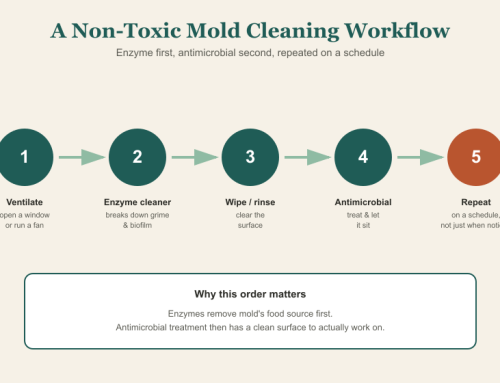
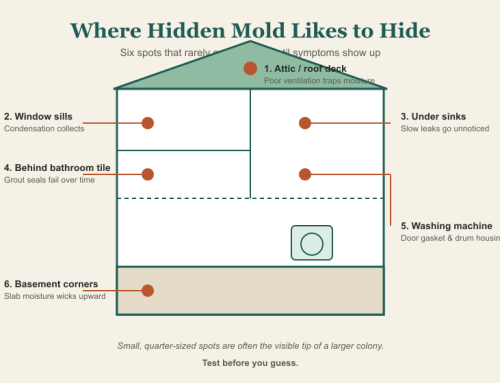
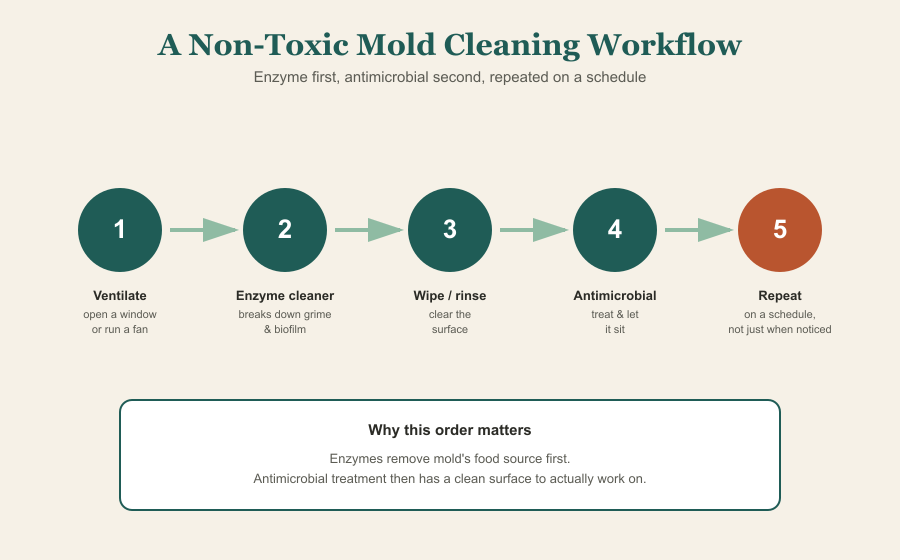
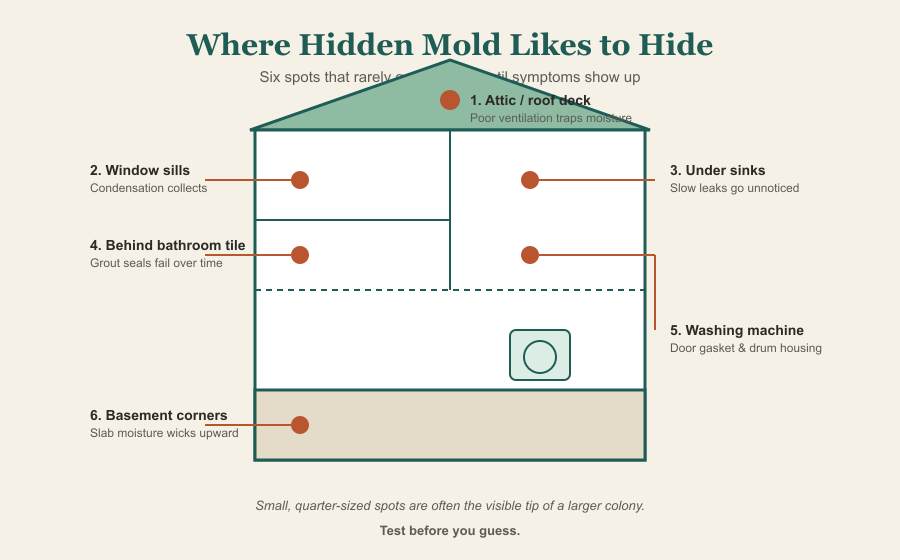
- Eliminate the exposure source first. This is the step that actually matters most and the one that’s easiest to skip in favor of supplements.
- Support general immune function through sleep, diet, and stress management — unglamorous, but the evidence base for these fundamentals is much stronger than for any single supplement.
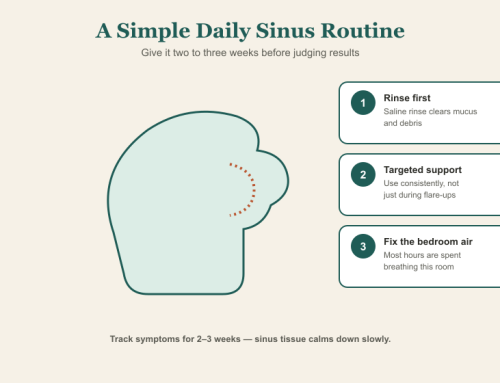
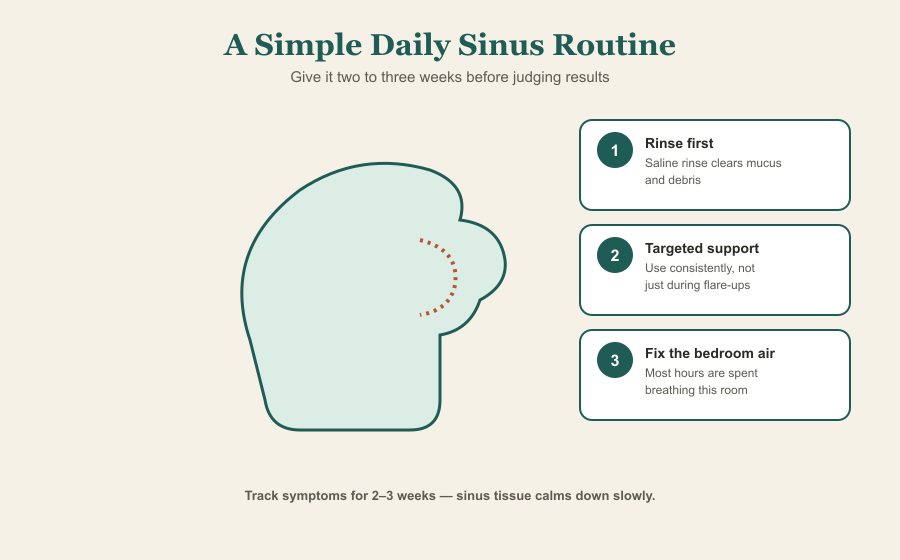
- Consider targeted immune and antifungal support as a complement, not a replacement, for addressing the environmental source. Micro Balance’s immune-support product line and antifungal category are organized around this use case if you want to explore options after you’ve addressed your home environment.
- Work with a practitioner if symptoms are significant. If you suspect mold exposure is meaningfully affecting your health, a doctor familiar with environmental and immune health can help you sort out what’s actually going on rather than guessing from symptom lists online.
You can also see how the company organizes products by immune and cellular health concern here if you want a starting point for comparison.
The bottom line
Mold’s effect on allergies and asthma is not in question. Its role in broader chronic illness is a real, active area of both clinical practice and scientific debate — treat strong claims in either direction with some skepticism, address exposure sources directly, and loop in a doctor for anything persistent or severe.
Frequently Asked Questions
Is CIRS a recognized medical diagnosis? It’s not currently listed as a formal diagnosis in major diagnostic frameworks used by mainstream medicine, though it is used clinically by a subset of environmental medicine and functional medicine practitioners, generally based on symptom clusters, specific lab markers, and exposure history. Whether to pursue evaluation and treatment under this framework is a personal decision worth making with a practitioner you trust, ideally alongside conventional medical care rather than instead of it.
Can mold seriously affect otherwise healthy people, or only those who are already vulnerable? Healthy people can absolutely have allergic and asthma-related reactions to mold — that part isn’t in question. More severe, invasive fungal effects are much more strongly associated with immunocompromised individuals. Where healthy people fall on broader, more contested symptom patterns is exactly the part that’s still debated.
Are mycotoxin urine tests reliable? This is genuinely contested. Some practitioners rely on them as part of a diagnostic picture; some researchers and toxicologists have raised concerns about standardization, specificity, and the lack of large validation studies for certain commercially available panels. If you get one done, it’s worth discussing the result with a practitioner who can put it in context rather than interpreting it in isolation.
What kind of doctor should I see if I suspect mold is affecting my health? A reasonable starting point is your primary care physician, who can help rule out other causes and refer you appropriately — to an allergist for suspected mold allergy, a pulmonologist for respiratory concerns, or an environmental medicine specialist if you want to explore a more mold-focused evaluation.
Does removing mold from my home guarantee my symptoms will improve? Not necessarily, and it’s worth having realistic expectations. Removing an ongoing irritant is a reasonable and often helpful step, but symptoms with multiple contributing causes may only partially improve, or may take longer to resolve than the cleanup itself. This is exactly why pairing environmental changes with medical guidance tends to produce more realistic, trackable outcomes than either alone.