You clean your clothes to get them clean. So it’s a strange thing to learn that the machine doing the cleaning might be one of the moldiest appliances in your house. If you’ve ever pulled a “clean” load of laundry out and caught a sour, musty smell, you already have first-hand evidence.
Why front-loading washers are especially prone to mold
Front-loading machines are more water- and energy-efficient than top-loaders, which is why they’ve become so popular. But that efficiency comes with a design trade-off: they use less water, run at lower temperatures, and seal with a rubber door gasket that traps residual moisture after every cycle.
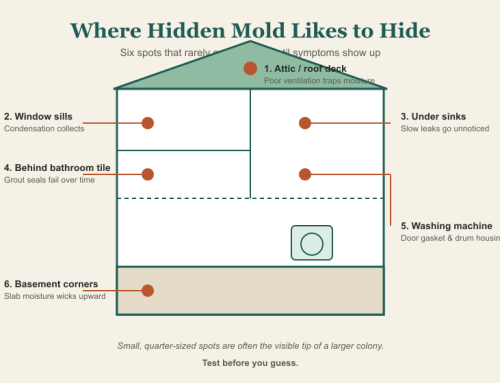
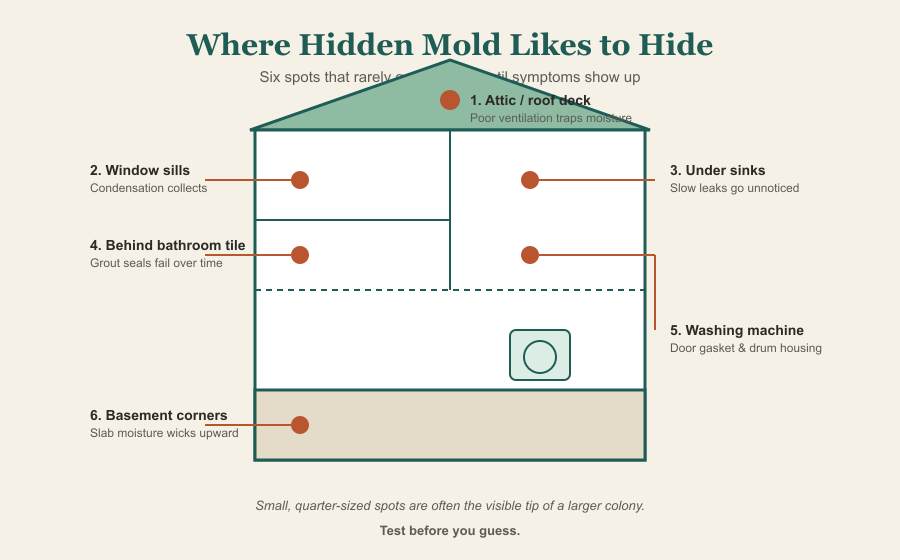
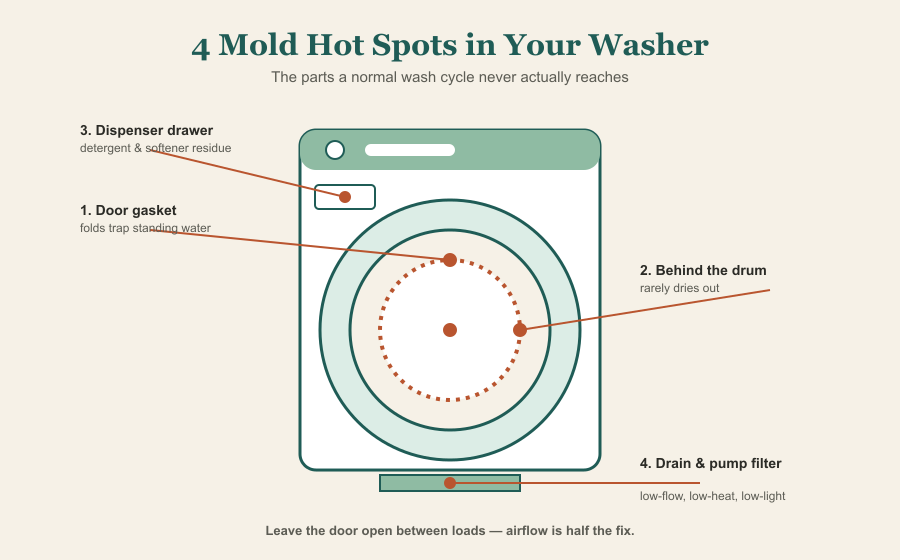
That combination — leftover water, detergent and fabric softener residue, low heat, and a sealed, dark environment — is close to ideal for mold growth. The usual hot spots are:
- The rubber door gasket, especially in the folds along the bottom
- Behind the drum, where water pools and rarely gets exposed to open air
- The detergent and fabric softener dispenser drawer
- The drain hose and pump filter
None of these are visible during normal use, which is exactly why the problem builds quietly for months before you notice a smell.
Why “clean” laundry can still carry mold
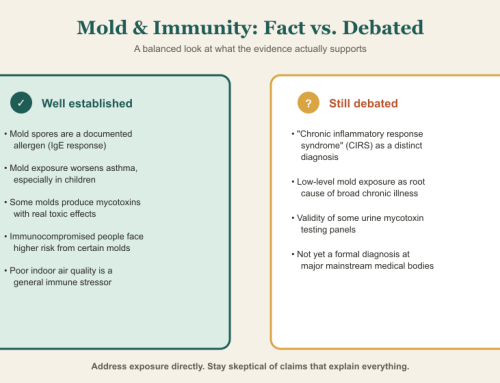
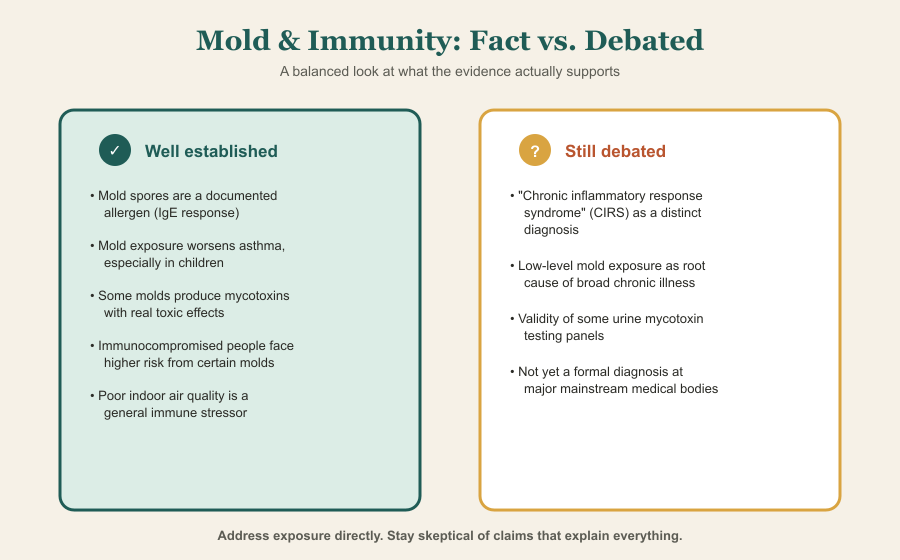
Standard detergent is formulated to remove dirt, oil, and stains — it isn’t designed to eliminate mold spores or the biofilm that builds up inside the machine itself. So even if your clothes look and smell fine coming out of a normal wash, spores living in the gasket and drum housing get redistributed onto every subsequent load. This is a particularly relevant issue for anyone dealing with mold sensitivity, since freshly “cleaned” towels and sheets can end up being a source of ongoing exposure rather than a clean slate.
A basic maintenance routine that actually helps
- Leave the door and detergent drawer open between loads. Trapped moisture is the whole problem — airflow is the simplest fix.
- Wipe the gasket folds dry after wash days, especially if you notice standing water.
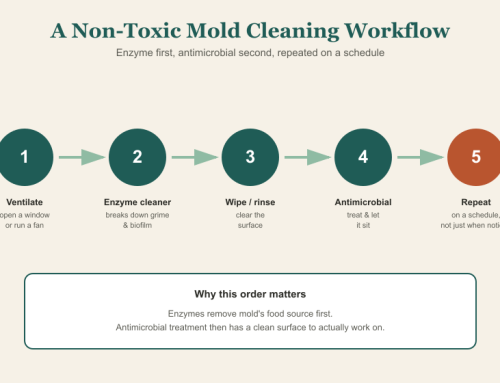
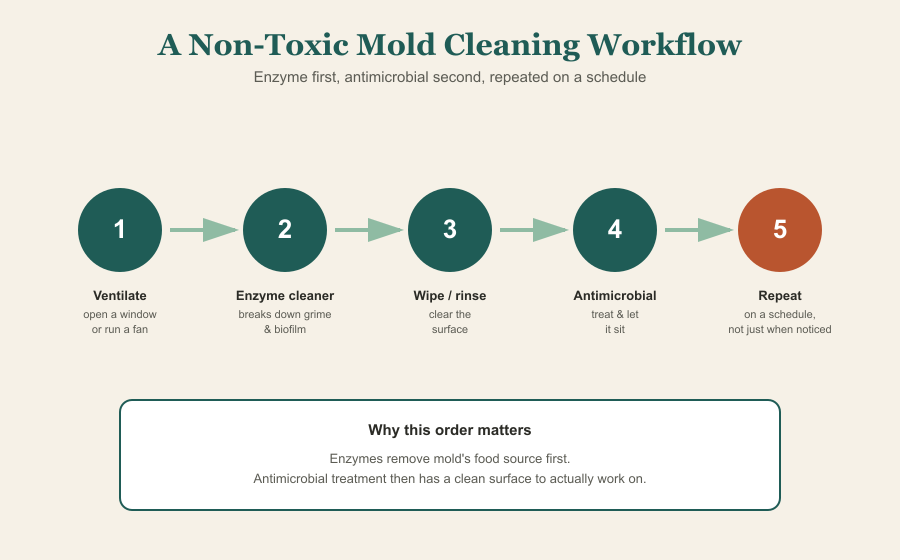
- Run an empty hot-water cycle periodically to flush out residue that builds up behind the drum.
- Skip fabric softener when you can, or use it sparingly — the residue it leaves behind is a food source for mold and mildew.
- Add an antimicrobial laundry additive to your regular wash cycle. This is the step most people skip, and it’s the one that actually treats the mold and mildew spores in the water itself rather than just managing symptoms.
On that last point, Micro Balance’s EC3 Laundry Additive is formulated specifically for this problem — it’s added directly to the wash cycle alongside your regular detergent and is designed to help address mold and mildew in both the laundry itself and the machine’s interior over repeated use. It’s a small, low-effort addition to a routine you’re already doing, which is probably why it’s one of the brand’s most consistently reordered products. You can see the rest of their laundry-focused lineup here if you want to compare options.
What about towels and bedding specifically?
Towels and bedding are worth extra attention because they stay damp longer than most other laundry and get reused before every wash. A few practical habits:
- Hang towels fully spread out to dry between uses rather than balling them up on a hook
- Wash towels and bath mats more frequently than you probably think you need to
- Avoid overstuffing the washer — mold-fighting additives and detergents need room to actually circulate
The bigger picture
A moldy washing machine is rarely an isolated issue — it’s usually one symptom of a broader moisture problem in the laundry room or an under-ventilated space. If you’ve addressed the machine itself and still notice a persistent musty smell in the area, it’s worth checking the exhaust venting on your dryer and testing the air in that room directly, which we cover in more detail in our guide to spotting hidden mold.
Frequently Asked Questions
Are front-loading washers actually worse than top-loaders for mold? Generally, yes, for the reasons covered above — the sealed door gasket and lower water/heat usage create a more mold-friendly environment. That doesn’t mean top-loaders are immune, especially high-efficiency top-loaders that also use less water than older models, but the rubber door seal on front-loaders is a genuinely unique risk factor top-loaders don’t have.
How often should I actually clean my washing machine? A quick wipe-down of the gasket after wash days is worth doing weekly if you’re using the machine often. A deeper clean — an empty hot cycle with a cleaning product designed for washing machines — is generally recommended monthly, or more often if you notice a smell developing before then.
Can mold in my washing machine actually make me sick? For most healthy people, occasional exposure to washing machine mold is more of an unpleasant nuisance than a serious health risk. But for people with mold allergies, asthma, or diagnosed mold sensitivity, repeated exposure through “clean” laundry — towels, sheets, clothing worn close to skin — can be a meaningful ongoing source of symptoms that’s easy to overlook because the laundry looks and feels clean.
Will plain vinegar or baking soda handle this, or do I need something more targeted? Vinegar and baking soda can help with mild odor and light residue, and running an empty hot cycle with vinegar is a commonly recommended DIY step. But neither has strong, consistent antimicrobial action against the mold and mildew species that actually colonize a gasket over time, which is why a product specifically formulated for that purpose — used consistently, not just occasionally — tends to outperform pantry staples for anyone dealing with a persistent problem.
Is it safe to use an antimicrobial laundry additive on baby clothes or sensitive skin? Always check the specific product’s label and safety information before using it on baby items or for anyone with particularly sensitive skin, and consider doing a small test first. When in doubt, reach out to the manufacturer directly with your specific situation — that’s a more reliable answer than a general guideline.