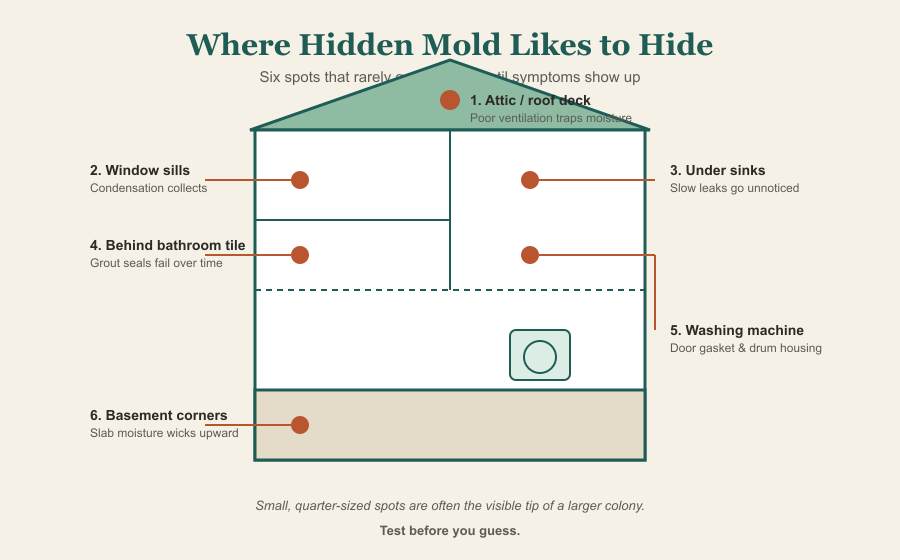
Mold has a reputation for being obvious — a black smudge in the shower grout, a fuzzy patch on old bread. But the mold that actually causes problems in a home is rarely the kind you can see. It grows behind drywall, under flooring, inside HVAC ducts, and in the gap between your washing machine drum and its outer shell. By the time it’s visible, it’s often been growing for months.
That’s the frustrating part for a lot of homeowners: you can feel like something is “off” in your house — a smell, a symptom, a general sense of unease — long before you have any proof. Here are ten signs worth paying attention to, and what to actually do about them.
1. A musty, earthy smell that won’t go away
That damp-basement smell is caused by microbial volatile organic compounds (MVOCs) — gases released as mold digests organic material. If a room smells musty even after cleaning, ventilating, and running a dehumidifier, the source is probably hidden rather than gone.
2. Symptoms that improve when you leave the house
If you (or your pets) feel noticeably better on vacation, at work, or just sitting in the car outside your own home, that’s a meaningful data point. Sinus congestion, headaches, fatigue, and skin irritation that ease up away from home and return once you’re back inside are worth taking seriously.
3. A history of water damage — even if it was “fixed”
A roof leak, a slow plumbing drip, a flooded basement, an overflowing washing machine — if it happened and the area wasn’t professionally dried within 24–48 hours, there’s a real chance mold took hold in the wall cavity or subfloor, even if the surface looks fine today.
4. Condensation on windows, pipes, or walls
Persistent condensation means the humidity in that space is high enough to support mold growth. Check window sills, the underside of sinks, and any exterior-facing walls, especially in bathrooms and basements.
5. Peeling paint, bubbling drywall, or warped baseboards
These are all signs of moisture intrusion behind the surface — exactly the environment mold needs. Warped baseboards near a bathroom or kitchen are especially worth investigating.
6. Worsening allergy or asthma symptoms indoors
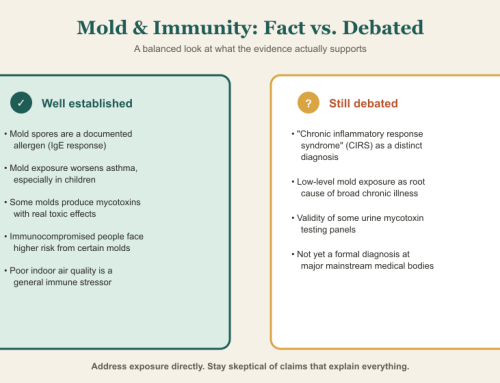
If antihistamines aren’t cutting it, or your asthma has gotten harder to control without any other explanation, indoor air quality is worth a look. Mold spores are a well-documented allergen and respiratory irritant.
7. Visible discoloration, even small spots
Small doesn’t mean insignificant. A quarter-sized dark spot on a ceiling tile or in a corner of the shower can be the visible tip of a much larger colony growing inside the material.
8. Rooms that always feel “heavy” or humid
If one particular room never quite feels dry no matter the season, something is keeping the humidity elevated — poor ventilation, a slow leak, or moisture wicking up through a slab foundation.
9. Musty-smelling laundry, even right out of the dryer
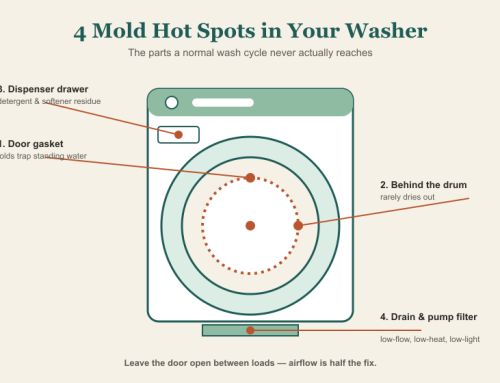
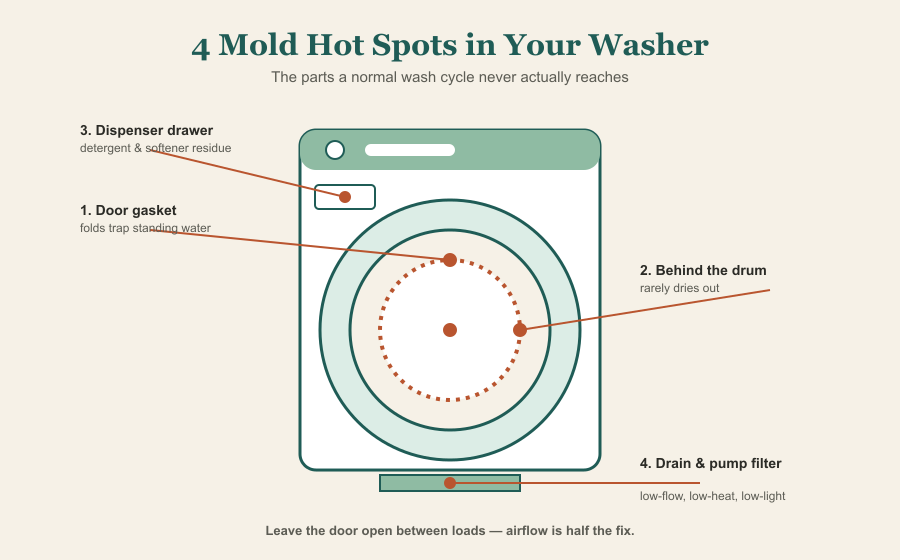
This one surprises people, but it’s extremely common. Front-loading washing machines in particular trap water in the rubber door gasket and the space behind the drum, creating a perfect breeding ground that transfers mold spores directly onto your clean clothes and towels.
10. A recent move into an older home or a unit that sat vacant
Homes that were unoccupied, poorly ventilated, or not climate-controlled for a stretch of time are far more likely to be harboring mold, especially in humid climates.
Stop guessing — actually test
Noticing a few of these signs is a reason to investigate, not panic. The most useful next step is testing rather than assuming. Micro Balance’s EC3 Mold Screening Test Kit is designed as an accessible way to sample air in multiple rooms and get a general read on airborne mold levels, so you’re working from information instead of a guess. They also carry a broader lineup of home testing options if you want to check specific problem areas like an HVAC system or a basement more thoroughly.
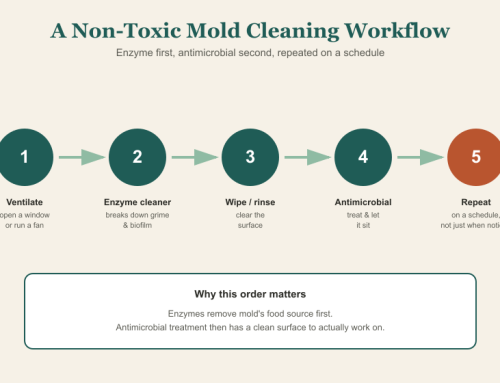
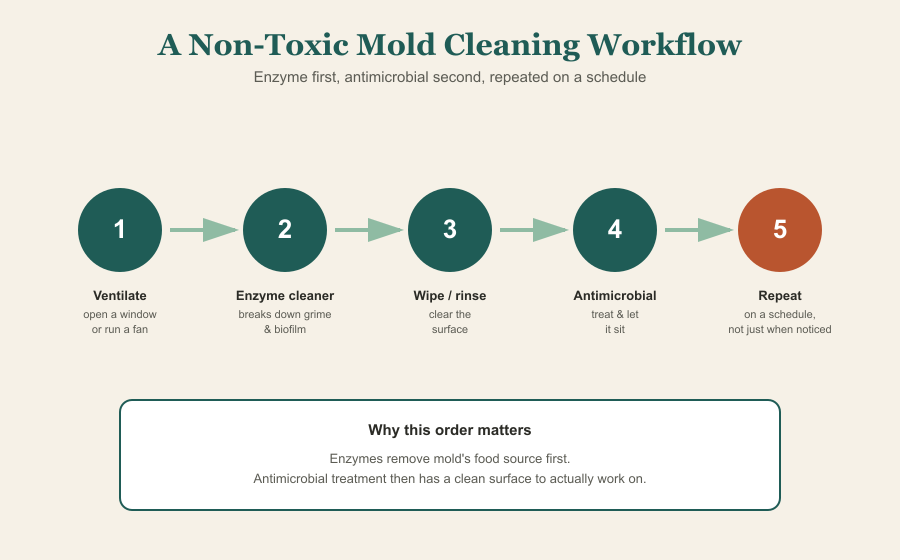
If a test does come back showing elevated levels, the next priority is finding and physically addressing the moisture source — no cleaning product or supplement replaces fixing a leak or improving ventilation. Once the source is under control, non-toxic cleaning and maintenance products can help you get ahead of regrowth; we’ll cover exactly which ones are worth using in the next post.
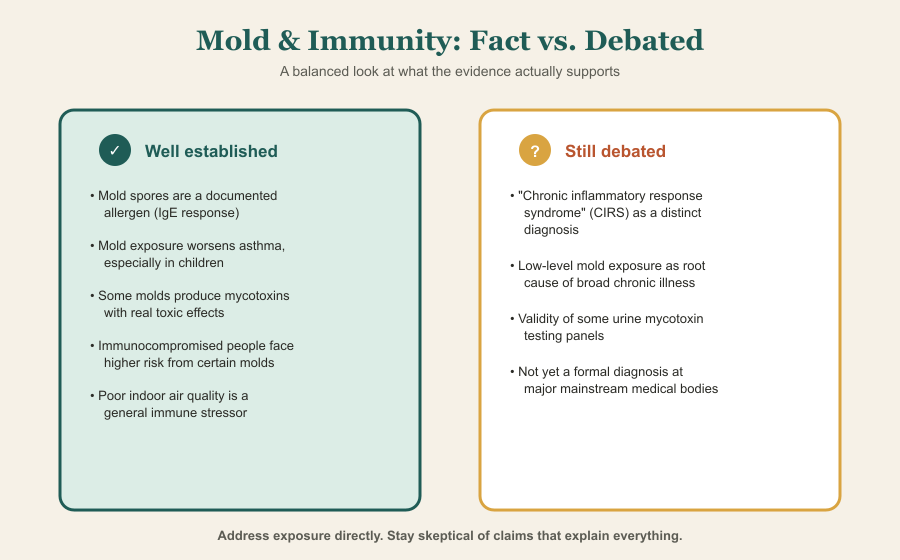
A quick note on health claims: mold’s role in allergy and asthma symptoms is well established, but claims about mold causing broader chronic illness are still debated within mainstream medicine. If you’re dealing with persistent, unexplained symptoms, loop in your doctor alongside any home investigation.
Frequently Asked Questions
Can I test for mold myself, or do I need a professional? For a general screening — “is there a problem worth investigating further?” — a consumer test kit is a reasonable starting point and is far better than guessing based on symptoms alone. If a screening test comes back elevated, or if you’re dealing with a health condition that makes accuracy critical, a professional inspection with air sampling and moisture meters will give you more precise, actionable data, including exactly where the source is.
How long does mold testing actually take? Most consumer air screening tests work by exposing a plate or sampling device in a room for a set period (often several hours to a couple of days) and then either reading the results yourself or sending them to a lab. Lab-based results typically come back within a few business days.
What counts as a “normal” versus “elevated” reading? This depends on the specific test method, since there’s no single universal number. Outdoor mold levels vary a lot by season and region, and a reasonable comparison is often your indoor reading versus a simultaneous outdoor baseline reading — indoor levels significantly higher than outdoor levels are the more meaningful red flag than any single absolute number.
Does homeowners insurance cover mold damage? It depends heavily on your policy and the cause. Mold resulting from a sudden, covered event (like a burst pipe) is more likely to be covered than mold from a long-term, unaddressed leak or humidity issue, which many policies treat as a maintenance problem rather than a covered loss. Check your specific policy language, and document water damage and your response to it as soon as it happens.
I don’t see any of these signs — does that mean I’m in the clear? Not necessarily, but it’s a reasonably good sign. Mold that’s genuinely well contained and not affecting air quality often doesn’t produce noticeable symptoms or smells. If you’ve had any water damage history at all, periodic testing as routine maintenance — rather than only testing when something seems wrong — is a reasonable habit, especially in humid climates.